


Course 3
DULANG
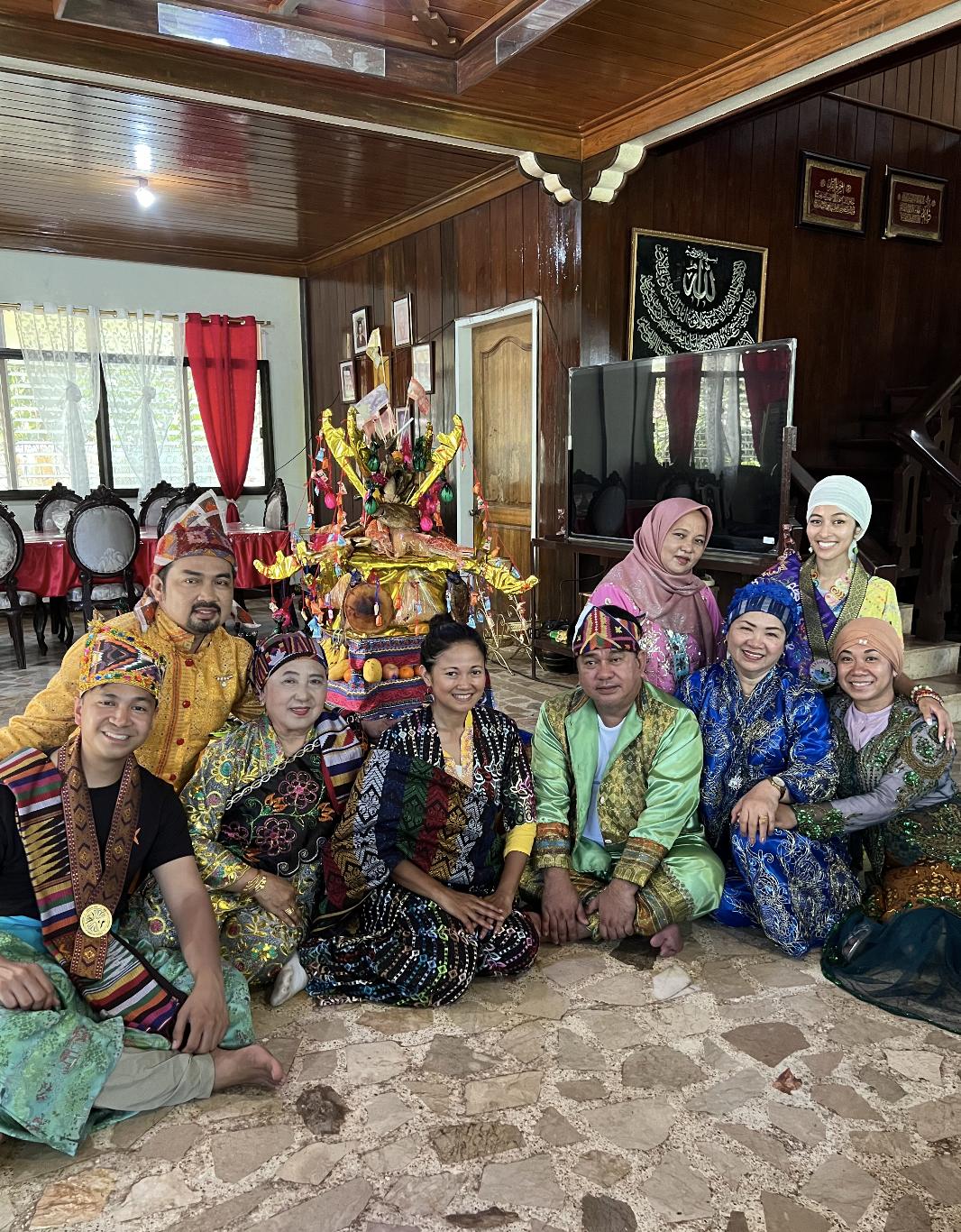
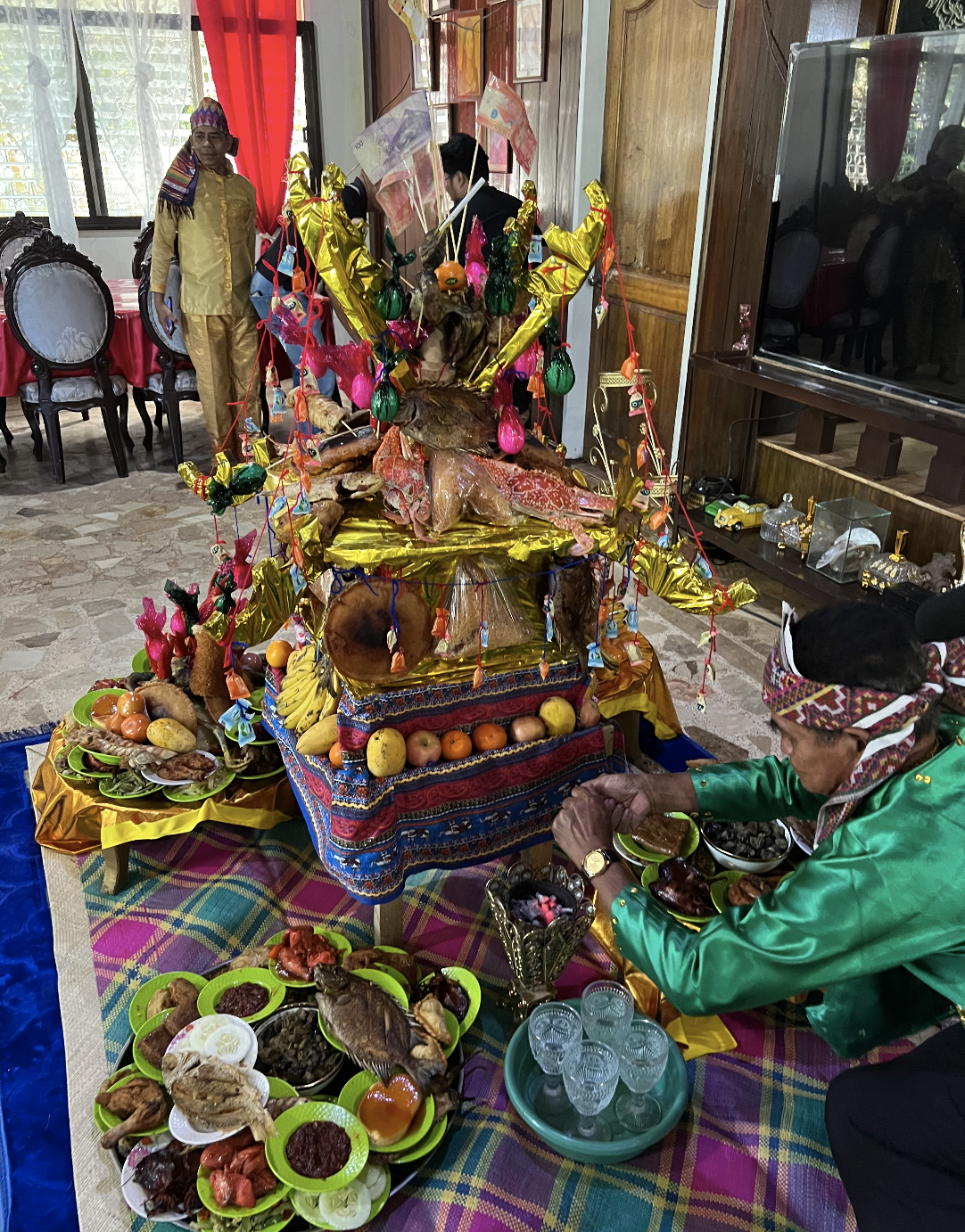
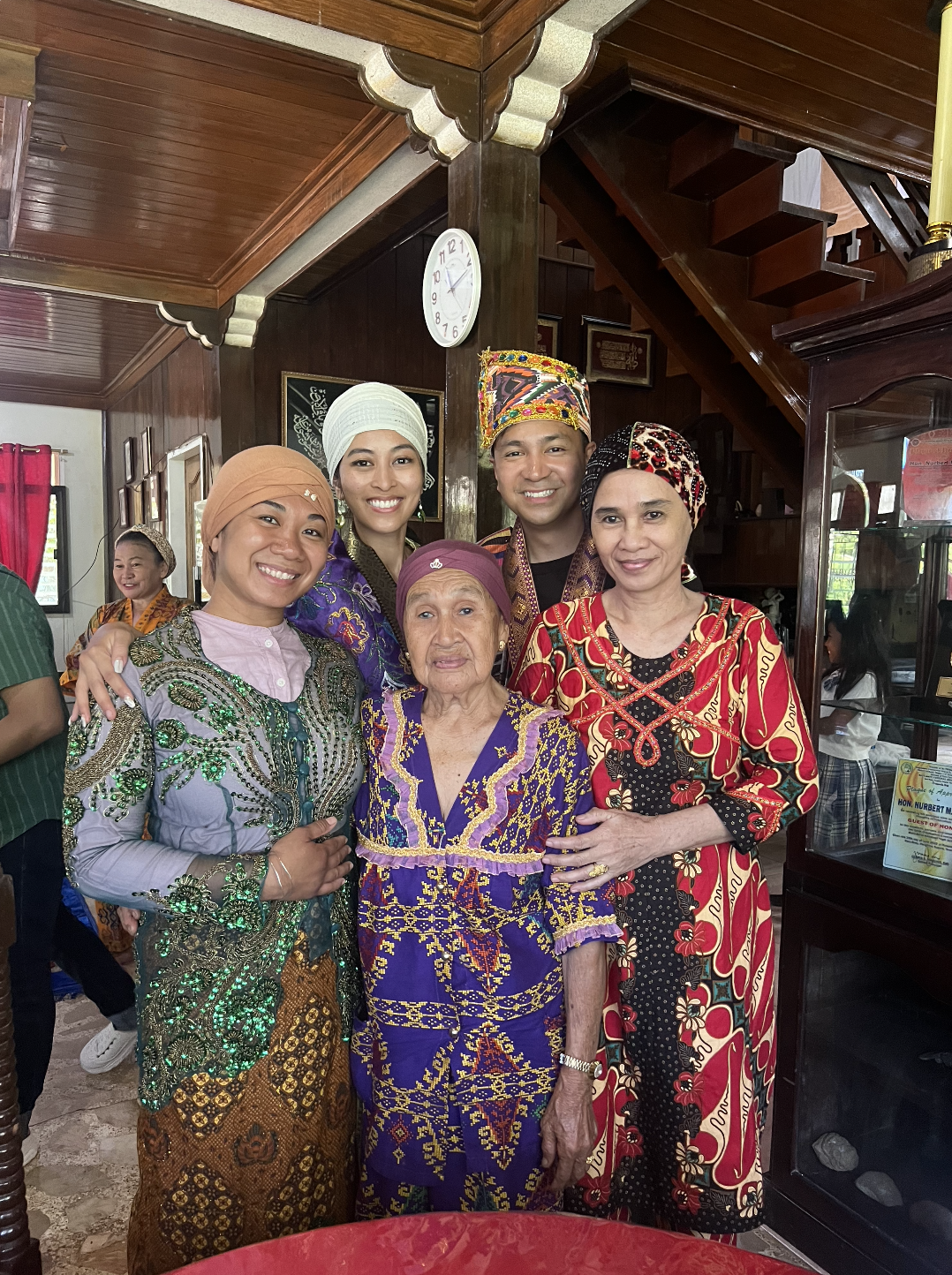
Our team had the honor of being invited to a dulang at the mayor’s home in Panglima Sugala in Tawi-Tawi. This Muslim Mindanaoan feast is celebrated during special occasions by Muslim Filipino groups like the Tausug, Yakan, Maranao, and more!
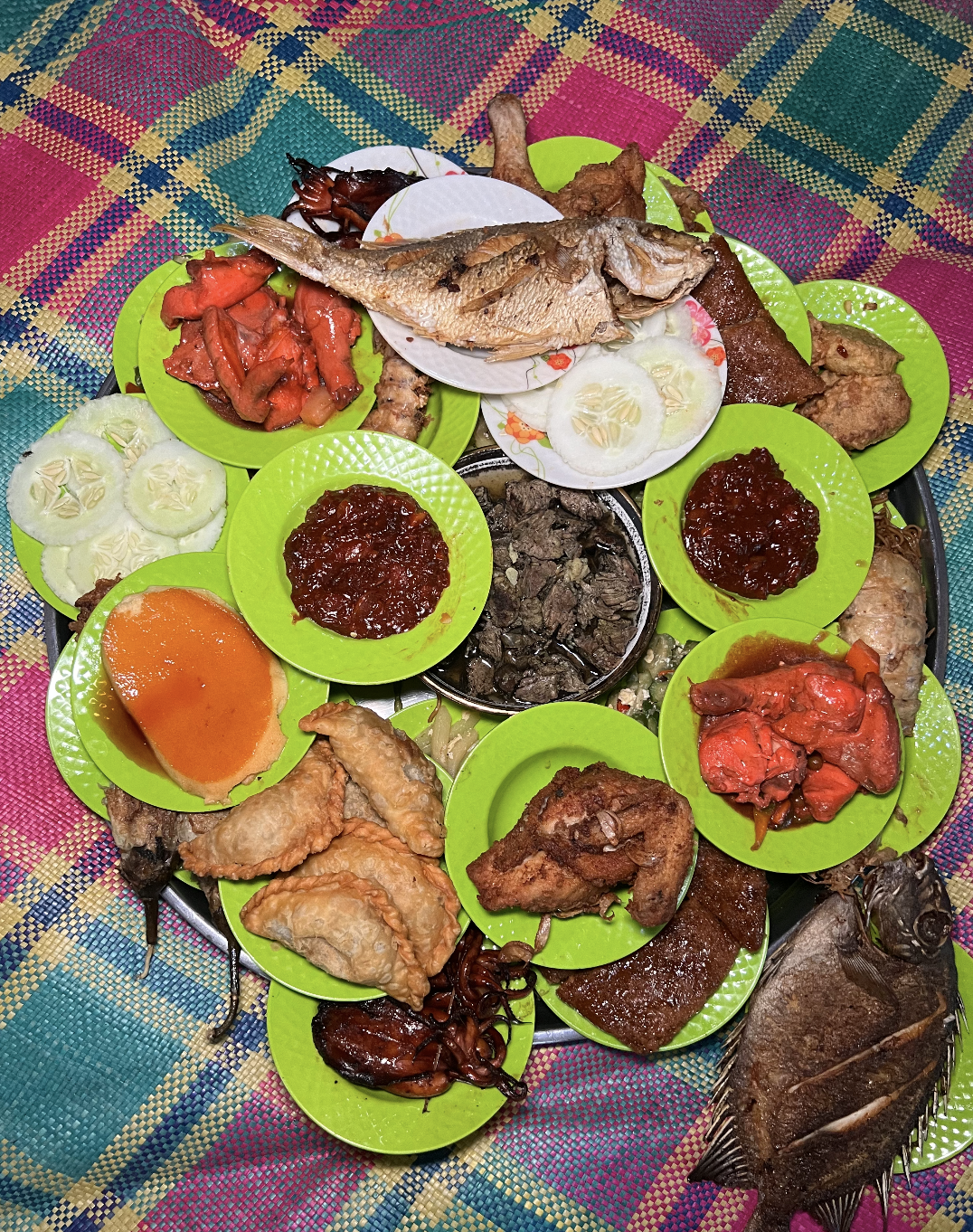
Not only is it a communal celebration of sharing food and stories, but it’s also a unified gathering where an entire neighborhood can take part in preparing the feast. Typically placed on a large, round tray or platter lined with banana leaves, the spread includes delicacies like Tiyula Itum, Kulma, and/or Kinilaw.
And diners eat with their hands—a practice us Filipinos are familiar with called kamayan, symbolizing the respect we have for the food and the environment.
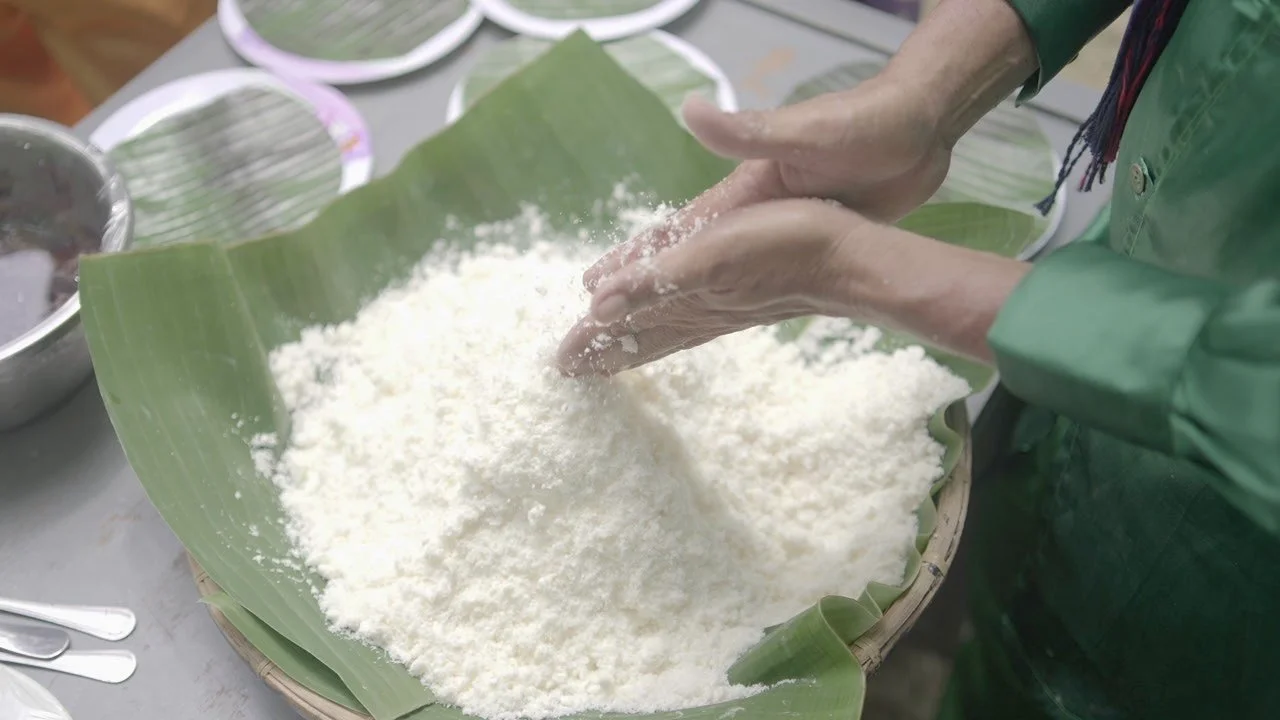
The case for Cassava
During our time in Tawi-Tawi, the southernmost region of the Philippines, we had the privilege of visiting Simunul, home of the oldest mosque in the Philippines. The community welcomed us like family, and one of the highlights was when they shared a dish called Piyutu, made from cassava.
As we gathered around, they explained that cassava has been a staple in their lives for generations—long before rice became common in other parts of the Philippines. Since rice fields are scarce in this region, cassava has always been their go-to starch. Learning this while tasting Piyutu felt like we were sharing in something deeply rooted in their history. It wasn’t just a meal; it was a story of resilience and tradition, passed down through the ages.
-
Kulma, like curry, is characterized by a complex flavor journey informed by its combination of herbs and spices. Aromatic, rich, creamy— kulma is often served with beef in the Sulu archipelago. Lamb is typically only used for special occasions in Sulu, so this is a treat!
-
The centrepiece to many important events and made by the community with love, the taste of Tiyula Itum is synonymous with wedding bells in Tausug culture. Chicken meat is seasoned and fried with pamapa itum, a signature Moro blend of charred coconut and aromatics, and finished as a spicy soup.
-
Hailing from the Tausug peoples of Mindanao, Chicken Pyanggang is a “burnt” chicken dish traditionally served during celebrations. Using a charred coconut spice mix called Siyunug Lahing sourced straight from the palengke (market) of Mindanao, Chef Cat has prepared a certified-Halal roast chicken in a rich charred coconut curry.
-
Utak-utak is a popular traditional snack that embraces the ocean diversity surrounding them. This Moro dish uses ground fish and spices, fried and enjoyed by many. We made our utak utak into fun tater tot shapes.
-
Sambal is a popular and widely varied spicy condiment of Indonesian origin, usually made from fresh chili and herbs, mashed in a mortar with pestle. Chef Cat’s interpretation of the sambal is cooked down with shrimp into a smooth paste, and sliced cucumber is topped with shrimp powder and fried shallots for texture.
-
A staple Tausug accompaniment, Piyutu is typically a salted cassava cake steamed in perforated coconut shells. A portmanteau of ‘piyulu’ (meaning ‘cassava’) and ‘puto,’ (meaning ‘steamed rice cake’) it is typically served alongside fish.
-
Steamed white rice is infused with turmeric to give this dish its golden hue. A classic accompaniment to the ulam (viands) of Mindanao.