

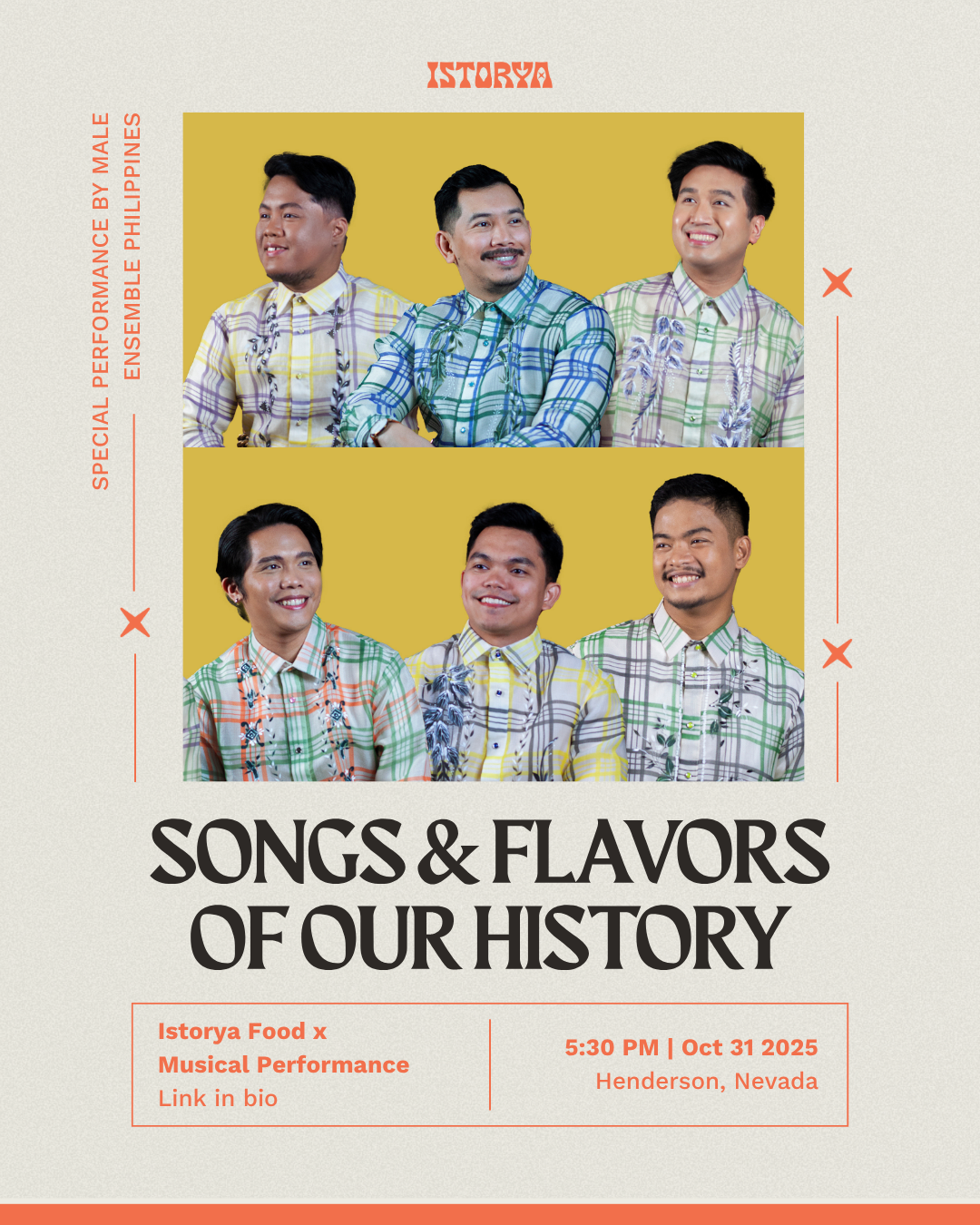
Welcome to Songs & Flavors for our History
Happy Halloween! We are excited to share with you what we have planned for this evening.

Tonight’s Menu (10.31)
HOW FOOD AND SOUND COME TOGETHER
I: (A call to gather) : Origins
The voices of our ancestors have always guided us and tonight is no different. Whether through food or song, it is never a one person journey. Here’s to calling our people in and honoring the flavors that have always been.
Featuring:
Tangguyug (A call to gather)— Eudenice Palaruan (Ifugao)
II. Songs from Distant Shores: The Colonial Echo (Global Influences)
Admiring beauty is universal. As new flavors have been introduced, so have what it means to connect with the world and people around us. From spices to songs, the appreciation we have for celebrating what matters will always be present.
Featuring:
El Dia Que Me Quieras (The Day that you Loved Me)— Carlos Gardel arr. Robert Delgado (Spanish)
Estrellita (Little Star)- Manuel Ponce (Mexican)
Mo Li Hua (Jasmine Flower)— arr. Timothy Sherlock, adapted by MEn, Chinese Folk Song (Chinese)
III. Buhay, Pag-ibig, Panaginip: Philippine Folk Memories (Philippines — Then and Now)
Encapsulating the depth of the human experience is real, relatable and a reminder that you don’t have to go through it alone. The sounds and flavors of home remind us how storytelling is naturally woven into the fabric of culture.
Featuring:
Sa Puno ng Saging (Traditional Harana) — Traditional Filipino, arr. Ruben Federizon (Luzon)
Pen Pen de Sarapen — Tagalog Folk Song, arr. Saunder Choi (Luzon)
Usahay — Visayan Love Song, arr. Ily Matthew Maniano (Visayas)
Zamboanga Hermosa— Borromeo Lou, Vicente Orendain, arr. Miguel Velarde Jr. (Mindanao)
Dilay-En — Talaandig Lullaby, arr. John Philip Bautista (Mindanao)
IV. Crossing Worlds: The Filipino Sound Today (Western Influence & Modern Filipino Voice)
No matter where rooted, we have agency in creating a sense of belonging. Sharing our palette of depth and flavor with the rest of the world is an open invitation for others to share the journey. Kain na, there’s a seat for you too.
Featuring:
Leaves — Paulo Benjamin, arr. Tomas Umberto Virtucio
When You Wish Upon a Star — Leigh Harline, arr. Ily Matthew Maniano
Da Coconut Nut — Ryan Cayabyab
BEYOND THE PLATING
-
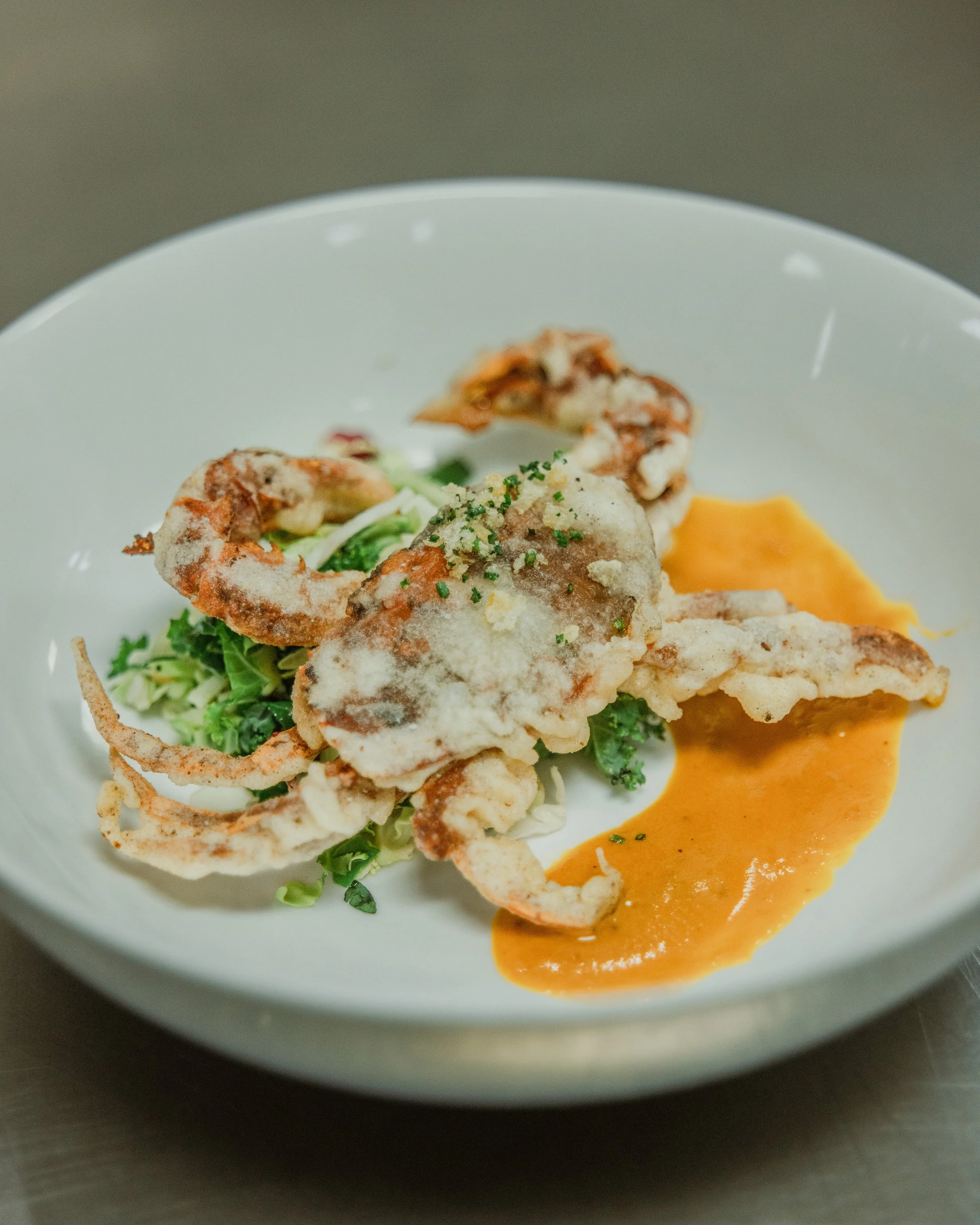
ALAVAR SOFT SHELL CRAB
The Alavar sauce you taste today is sourced straight from Zamboanga City, as developed in the 1970's by Maria Teresa Camins Alavar for curacha crab dishes, which are abundant in coastal Mindanao.
A unique product of Zamboangueño-Chavacano creole culture -the language of which is a marriage of Mexican, Spanish, Tagalog, and adjacent Sulu languages- Alavar sauce is made from coconut milk, crab fat, and spices.
The word Chavacano was used by Spaniards to describe the developing language as a vulgarity, being spoken in mestizo kitchens by locals who had not had the privilege of a formal Spanish education. This is not colonial cooking, but rather resilient regional creativity.
-
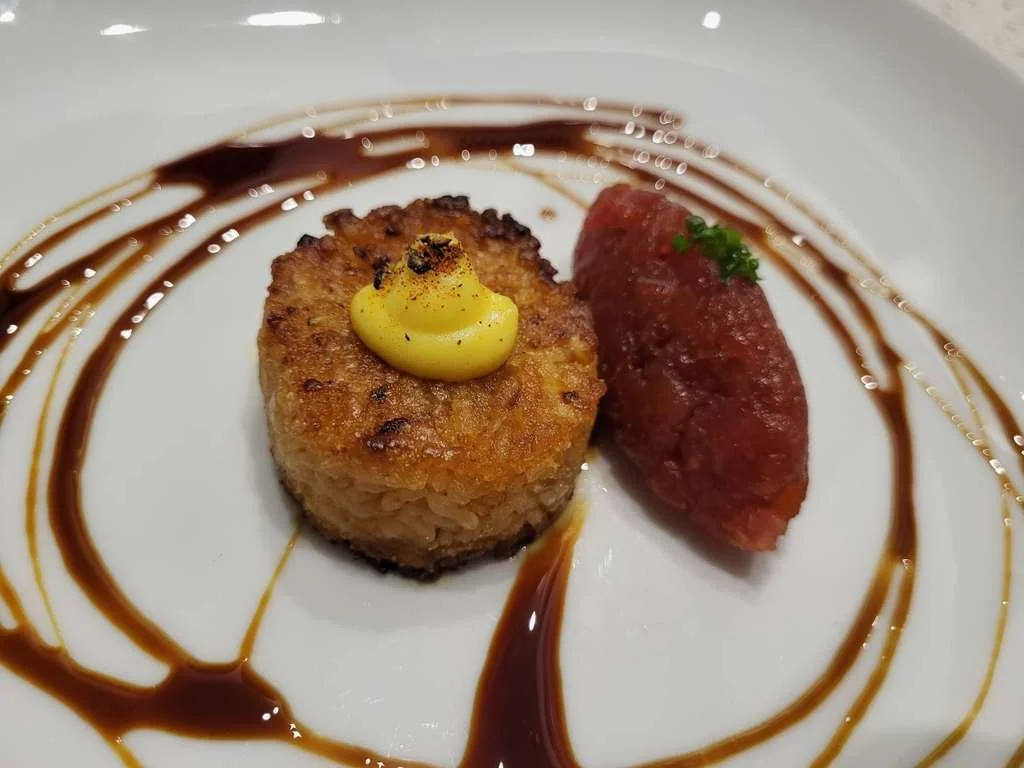
ARROZ VALENCIANA WITH TOCINO JAM
Arroz á la Valenciana, or Arroz Valenciana for short, means 'rice in the style of Valencia' as it was called in the Spanish colonies as it traveled. One popular version of this dish is paella, the name it is called by in its native Valencia.
Tracing its roots in Arab cuisine with saffron-tinged rice and South Asia with biryani, and even further to China where rice was first domesticated, rice dishes in Valencia were beneficiaries of the Silk Road. Concurrently in Pampanga, trade with the Indian subcontinent had resulted in bringhe, also descended from biryani, a turmeric-stained rice dish using coconut cream and chicken.
When Arroz Valenciana arrived in the Philippines, it was a sort of homecoming when the two sister dishes met and combined.
We chose to honor its Arab roots and the paella variation by re-introducing the spice Saffron, reputed as the most expensive spice in the world, of which Spain is famed to produce. It is, after all, the namesake of tonight's venue.
-
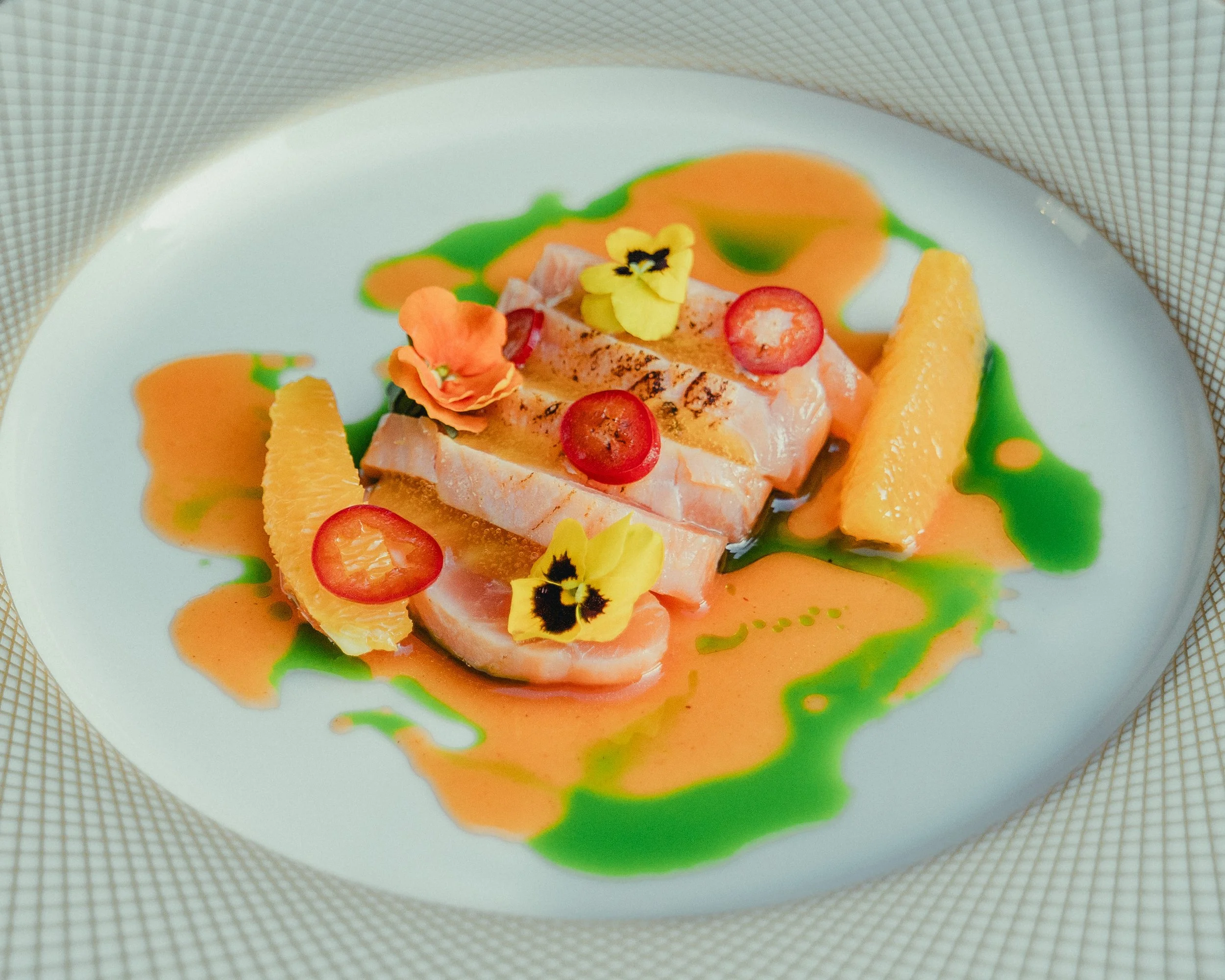
TUNA KINILAW
Kinilaw refers to the indigenous cooking technique of cooking in vinegar. This method predates colonization, dating back a thousand years to the northern Philippines. Like many Filipino dishes, this is highly regional. There are versions that use octopus, seaweed, goat, and even green mango, in place of the traditional mackerel or tuna.
As Filipino food historian Doreen Gamboa Fernandez notes, cooking in vinegar is a contrast to cooking with fire because it allows to keep the dish fresh. Tuna kinilaw balances sweet, tart, and tangy flavor
-
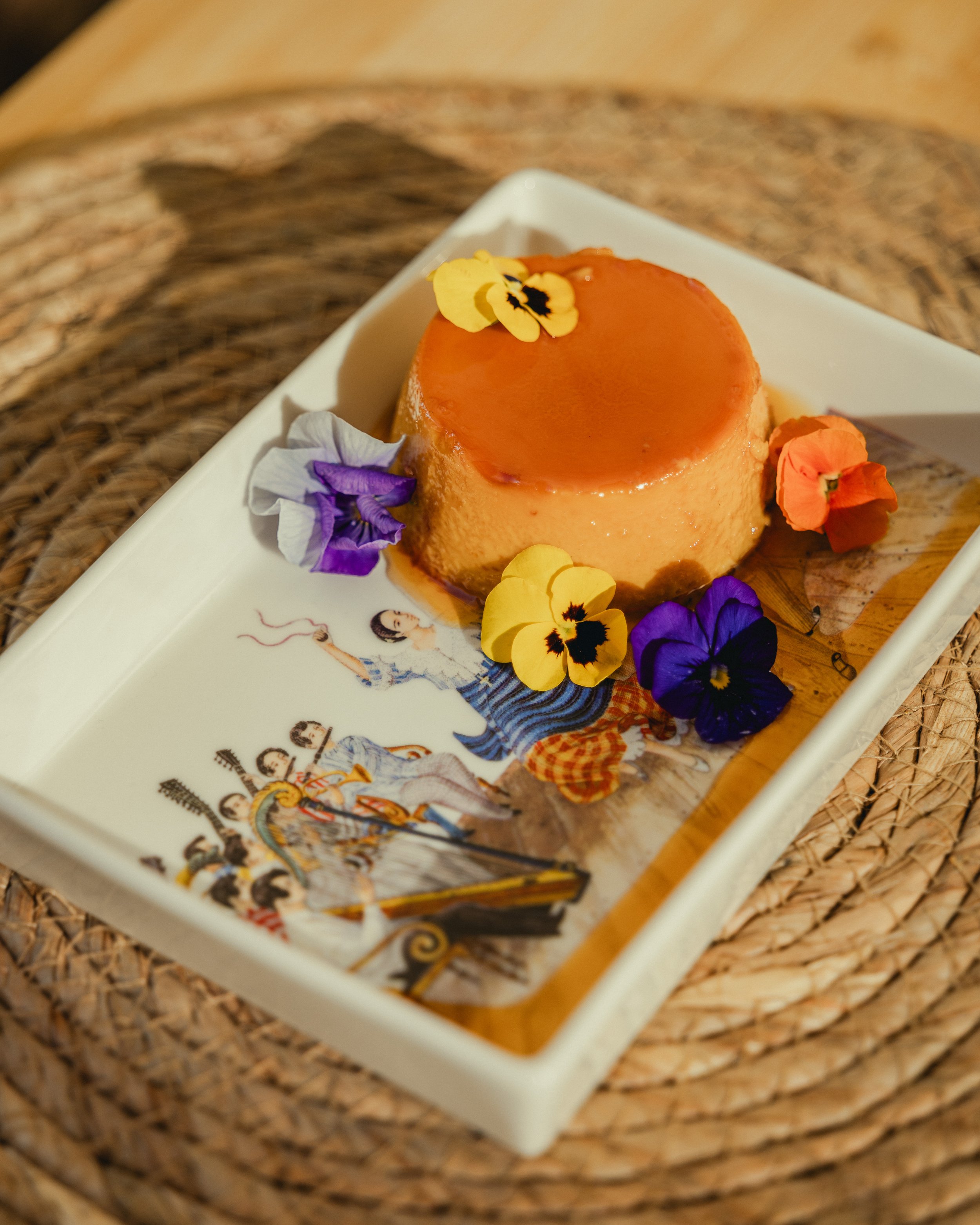
FLAN DE LECHE
Long before it became a beloved Filipino dessert at every fiesta and family gathering, Leche Flan first arrived in the Philippines through the hands of Spanish colonizers in the 16th and 17th centuries.
Rooted in Spanish and Latin culinary traditions, the original flan was a light, silky custard made with fresh milk, sugar, and eggs. Unlike its Spanish ancestor, the Filipino version uses more egg yolks and sweetened condensed milk, giving it that signature dense, creamy texture. This evolution also tells a story of time and innovation: condensed milk didn't even exist until the mid-1800s, and it wasn't until Nestlé introduced it to the Philippines in the early 1900s that Leche Flan as we know it was born.
-
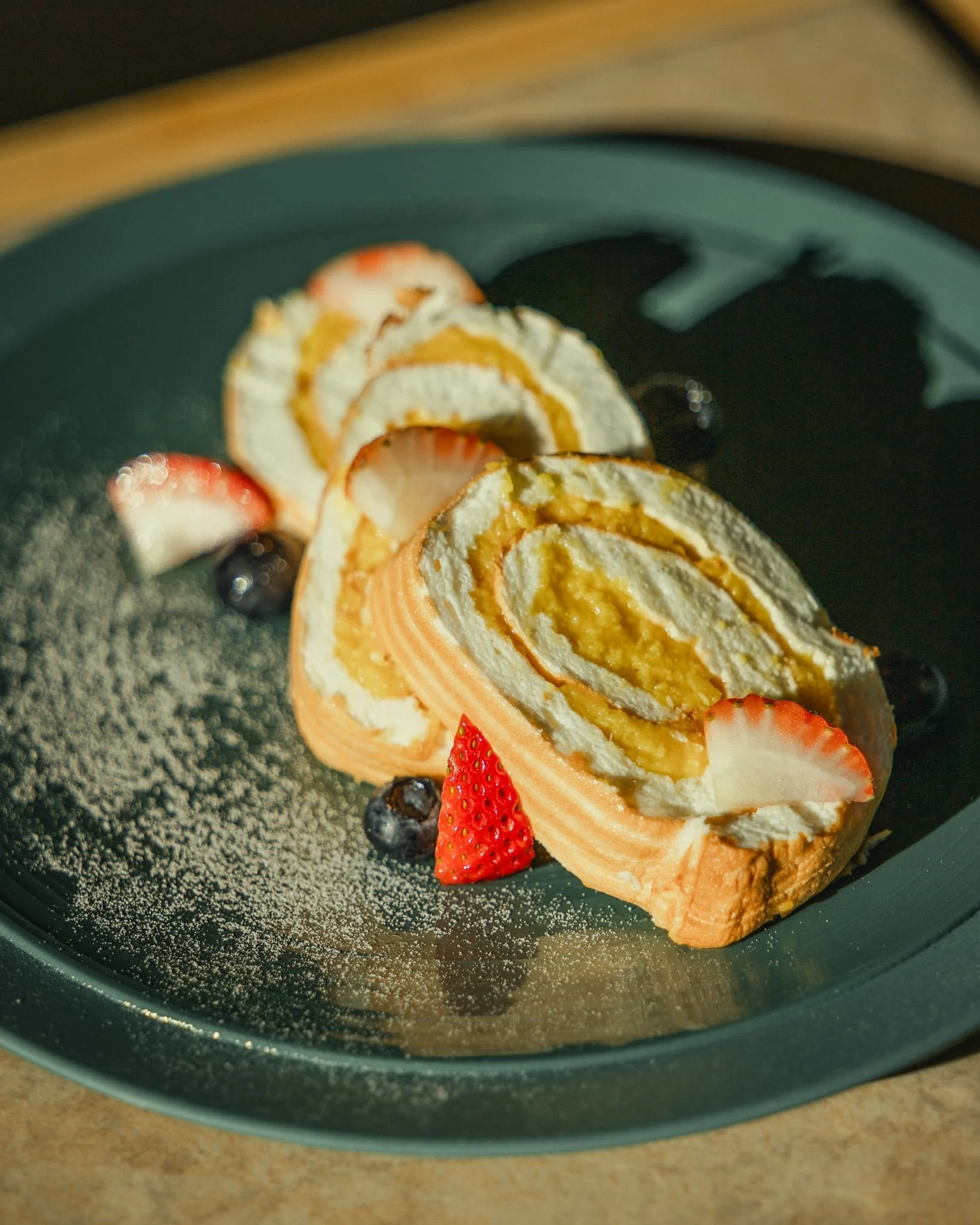
BRAZO DE MERCEDES
Brazo de mercedes, translated from Spanish means “The arm of Mercedes”, this dish finds its roots deep in Spanish culinary tradition, inspired by the European love for meringue and custard-based desserts. It is believed that it evolved from the Spanish confection known as Brazo de Gitan, a rolled sponge cake with a sweet filling. But Brazo de Mercedes took a unique turn, replacing the cake with cloudlike meringue, making it softer, lighter, and Filipino.
Its origin is tied to the history of the Philippines during the Spanish colonial era. Egg whites and egg shells were often used as a binding agent in construction, particularly for churches and buildings. This left locals with an abundance of egg yolks, and to not let them go to waste, Filipinos transformed them into a sweet custard called yema, a creamy blend of egg yolks and sugar that would later become the heart of Brazo de Mercedes.
Today, this dessert is enjoyed in good company, usually served during merienda with coffee or tea.