Starters and Small Bites: Empanada at Escabeche
CHEF’S TAKE
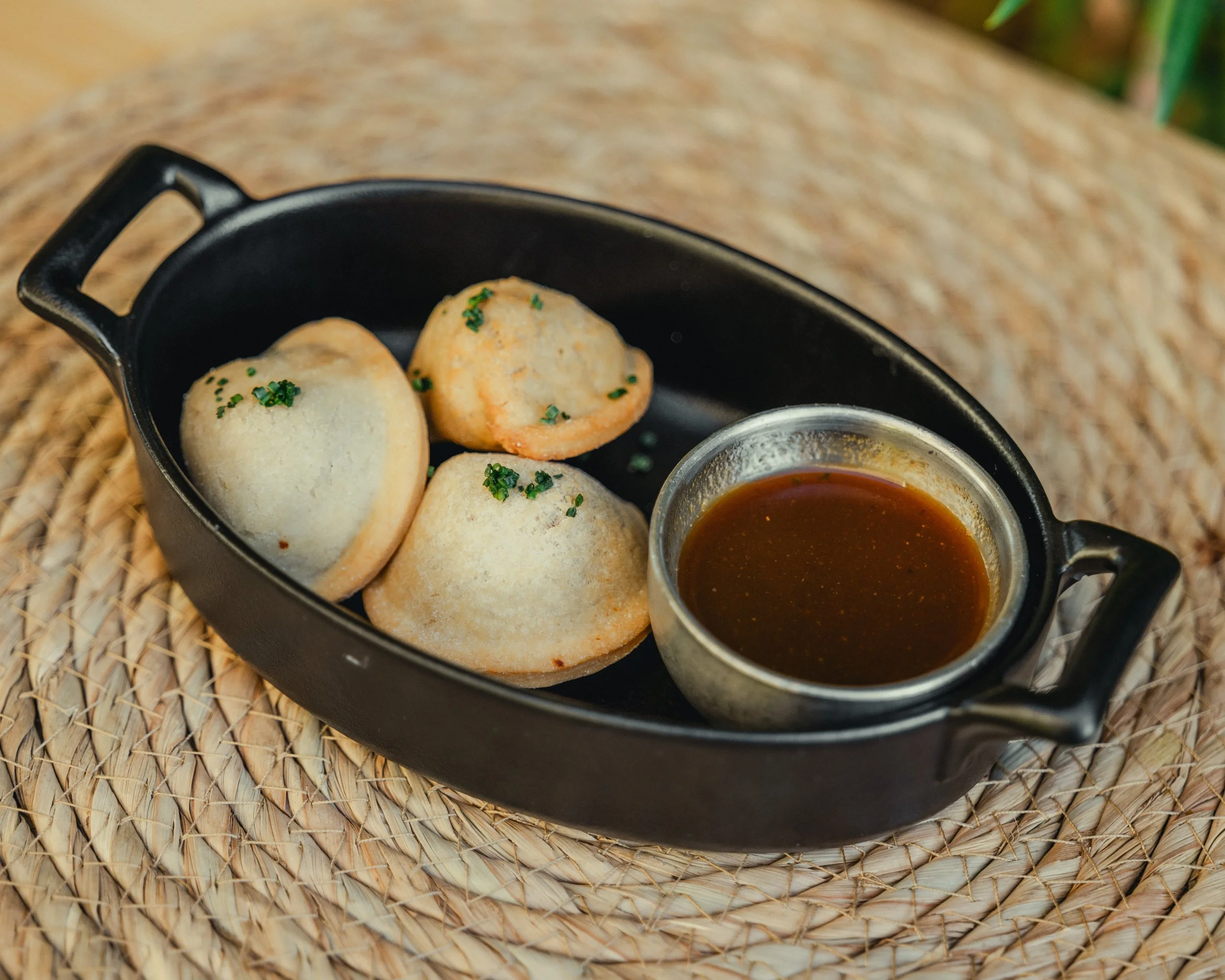
Lamb Adobo Empanada
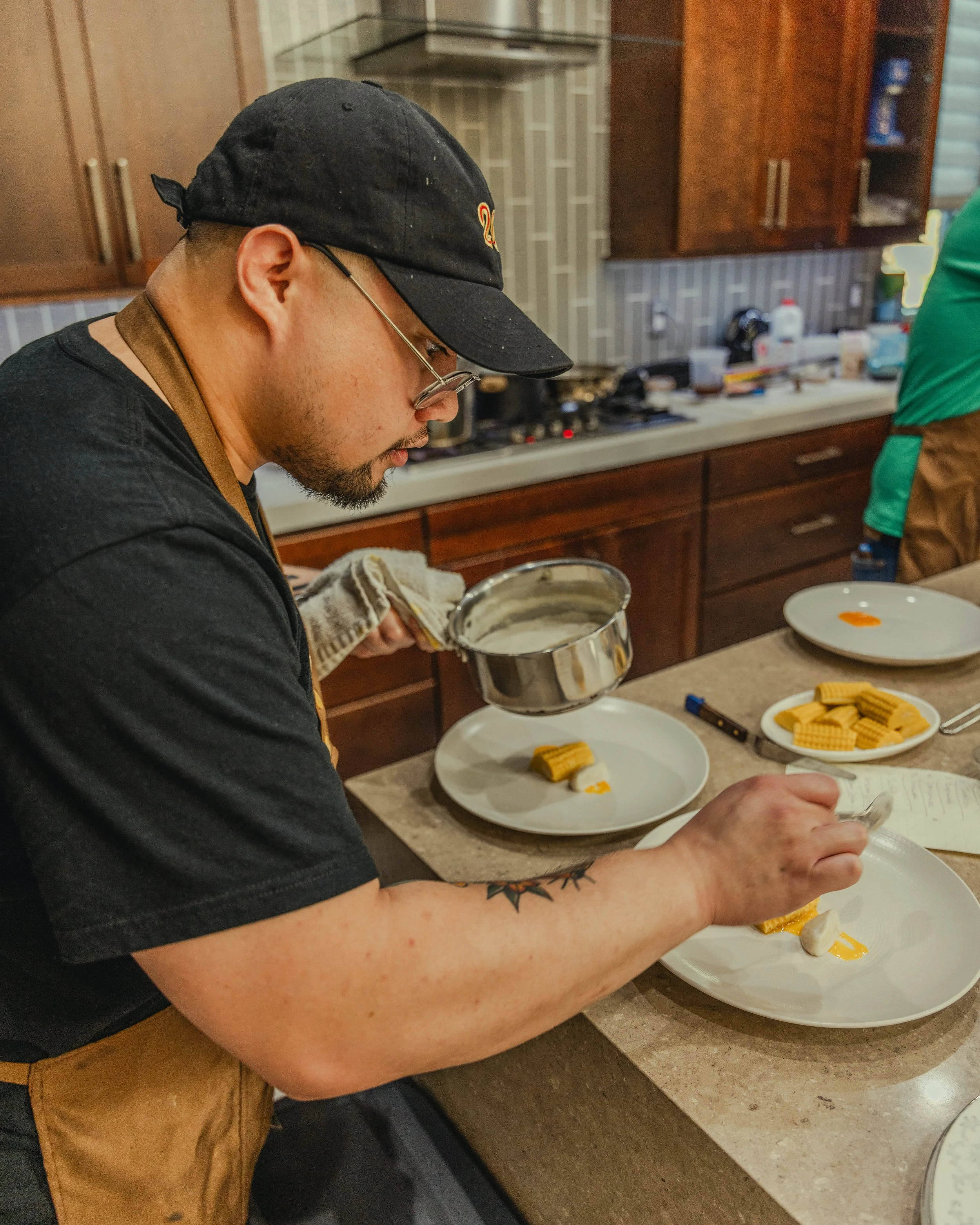
A lot of how I cook comes from curiosity, and most of that started at home. During the pandemic, I spent a lot of time dialing in my empanada dough. My uncle in LA shared his approach with me, so what I make now is really a mix of our styles.
Braising has always been one of my favorite techniques. When I thought about empanadas, it felt natural to bring that together with adobo. Lamb has this gaminess that pairs beautifully with adobo’s sour and savory depth, it just clicks.
What excites me about this dish is how it bridges worlds. Adobo is distinctly Filipino but also connects us to the Hispanic world. And empanadas do the same. They’re familiar across so many cultures, yet when you bite into this one, the flavors are unmistakably Filipino.
That’s why empanadas felt important to include in this chapter. They’re approachable, relatable, and they tell a story about how our food travels, adapts, and still carries our identity. For me, they’re not just something I love to eat—they’re a reminder of how connected we are through food.
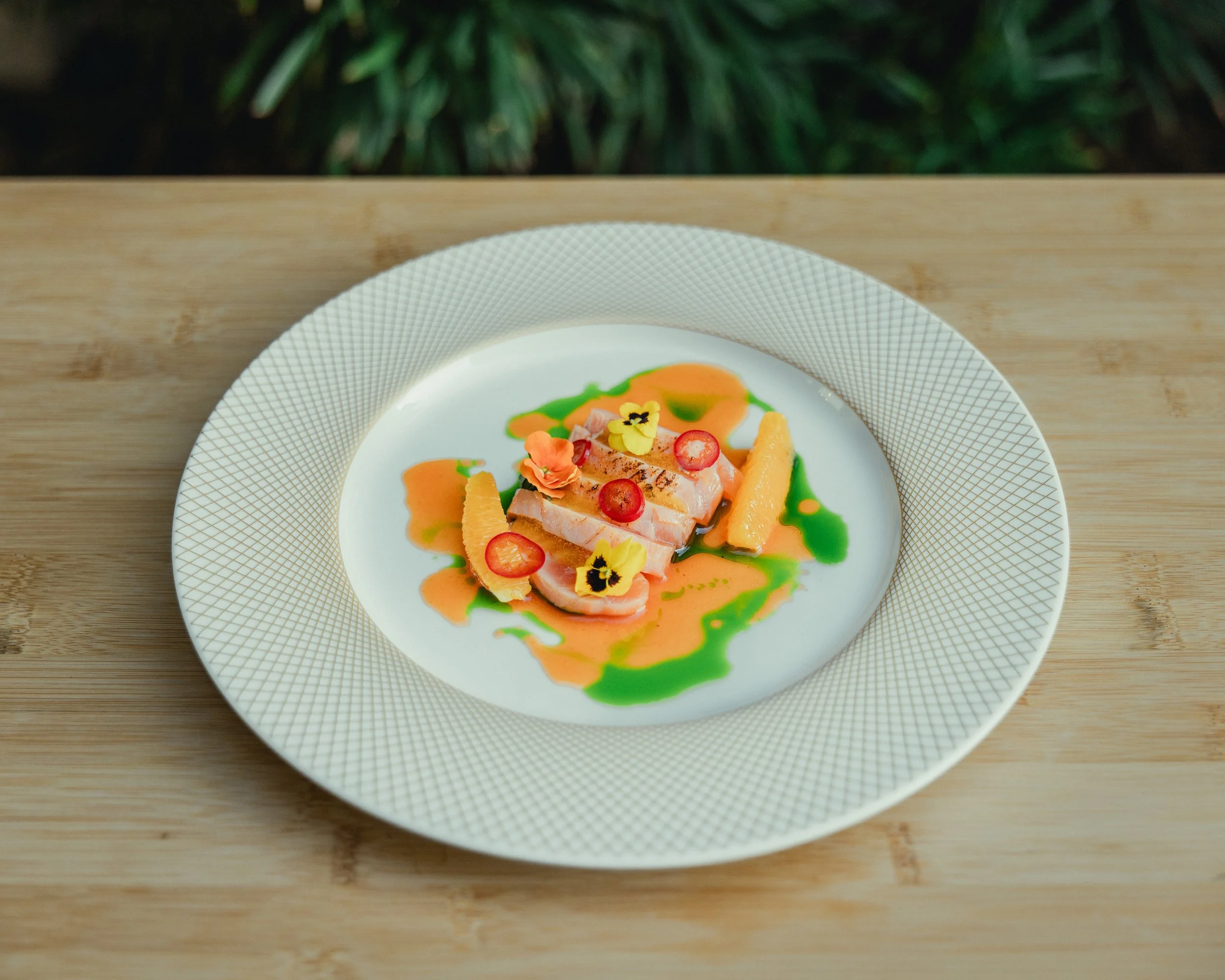
Salmon Escabeche
One of my go-to dishes, across any cuisine, is crudo: raw fish. I’ve always had a natural affinity for it. If I could open a restaurant dedicated only to crudo, I would.
So when we began planning this chapter, my first thought was: what Filipino dish could I reimagine as a crudo? Escabeche immediately came to mind. I started exploring how I could take something traditional and build it in a new way, adjusting the flavors, rethinking the balance, and letting the fish itself lead the story.
My time working sushi at FUHU in Resorts World shaped this approach. That’s where I fell in love with the process: breaking down fish, curing, torching, and layering textures. That experience stayed with me, and it’s what I brought into creating this dish.
- Chef Dio Buan (Co-Chef, Istorya)